
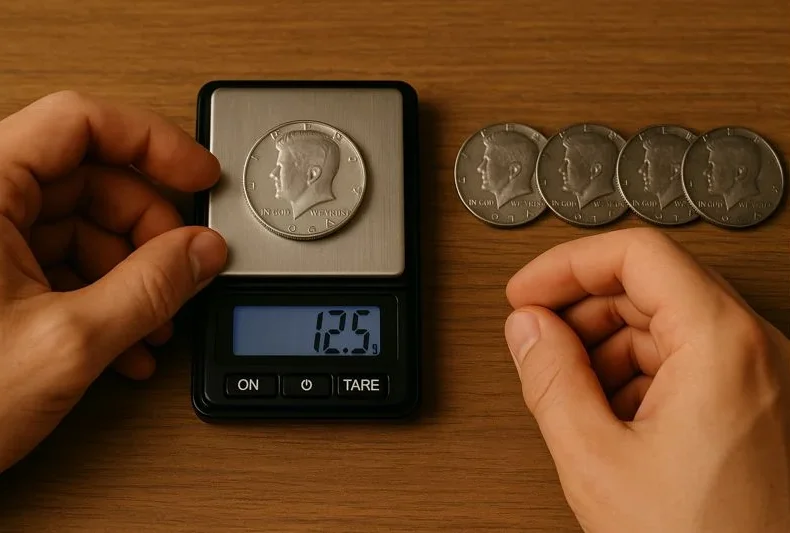
Common vs. Rare: How to Quickly Distinguish a High-Value Kennedy Half Dollar from a Regular One
The Kennedy half dollar value depends on metal, condition, strike, and the presence of specific varieties. The series includes silver, silver-clad, and clad groups, as well as proof, SMS, and NIFC issues. These differences create clear divisions between common circulation pieces and coins that show collectible traits. A practical method helps separate ordinary material from premium examples without complex terminology.
Why Distinguishing Value Matters
Kennedy halves appear in large quantities on the secondary market, yet only a small portion displays traits that push their value above face or melt levels. Silver issues react to bullion trends and show a stable entry point. Transitional silver-clad coins behave differently because one year shows restricted distribution. Clad issues form the broadest group, but also the group with the strongest grade-dependent separation.
Recognized varieties and specific strike types introduce further distinctions. Understanding these layers prevents misjudgment and helps approach the series with a consistent evaluation model.
Practical actions are essential because the differences are visible on the coin itself. Metal, date, mint mark, strike strength, and surface quality offer immediate signals that place the piece into a defined category.
First Step: Confirm the Metal Group
The metal defines the baseline. Each group behaves differently and sets its own expected range.
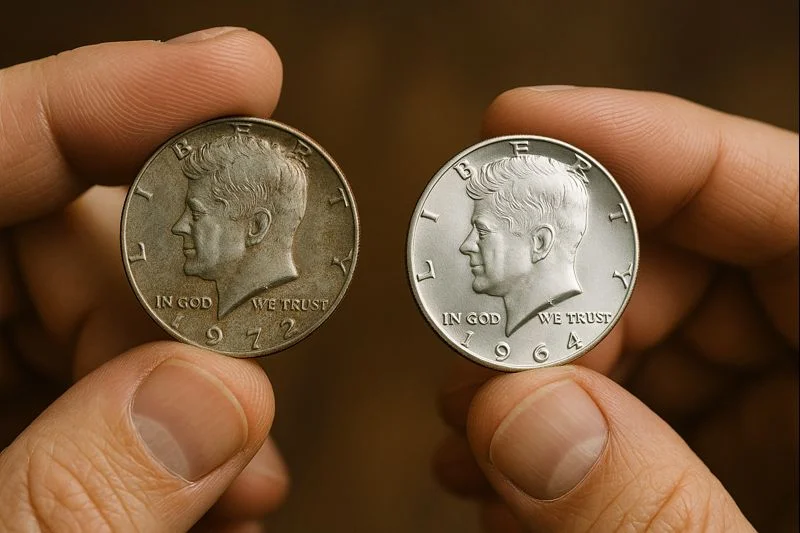
90% silver (1964)
This group mirrors the classic pre-1965 U.S. composition. The surface tone and weight are reliable identifiers. These coins hold melt value even in circulated condition.
Well-preserved examples show additional demand because the design retains detail effectively on the silver alloy. Proof issues, especially Accented Hair, stand in a separate range due to distinctive diagnostics.
40% silver (1965–1970)
This transitional alloy shows a pale rim and internal layering that differ from full silver. Wear patterns are softer, and luster appears muted. Most dates remain common, but the series includes the key 1970-D, which was not released into circulation. Grades above MS63 create a noticeable separation because fully lustrous surfaces survive less frequently.
Clad (1971–present)
These coins contain copper-nickel layers over a copper core. Edges show a visible color division. Most circulated pieces stay near face value. The real distinction appears in uncirculated grades.
MS65+ and MS66 examples represent a narrow surviving population with strong premiums. This makes metal identification the quickest way to establish whether further inspection is needed.
Recognizing the metal group shortens evaluation and prevents confusion between melt-based and grade-based segments.

Second Step: Check the Date and Mint Mark
Date and mint mark give the quickest way to separate routine issues from coins with controlled distribution or higher demand. These elements define how the series breaks into common material, silver groups, and restricted releases. A fast check of the date – mint pair removes most uncertainty before looking at condition or strike quality.
Key Years
Some dates show restricted output or special distribution patterns:
- 1970-D: limited to mint sets; consistent premiums.
- 1964: strong silver demand; sharper separation between grades.
- NIFC (2002+): low mintages; limited circulation.
These groups mark the important event of the series. Each one behaves differently on the market and becomes a clear reference point when sorting mixed lots or evaluating a new find.
Mint Mark Relevance
Mint marks filter common pieces from restricted issues:
- D in 1970 indicates a controlled release.
- S identifies proof and silver proof issues; regular NIFC coins appear only with P and D mint marks.
- No mint mark signals Philadelphia, with wide availability in most years.
This system helps narrow down availability. It also highlights combinations where scarcity appears inside an otherwise common period, making the date–mint pair a reliable first filter.
Third Step: Surface and Strike Quality
Surface and strike quality define how well a coin survived real use and how strong the original strike was. These traits help separate typical circulation pieces from coins that may reach premium levels in grading. A short inspection of luster flow, rim clarity, and relief sharpness often gives the most accurate first signal.
Wear patterns
- Silver issues retain detail longer but show flattening on the hair and cheek.
- Clad issues lose luster quickly and show contact marks from bulk handling.
- Weak rims and soft hair strands indicate average strikes.
Examples: A 1964 silver half with flat hair above the ear shows typical circulation wear. A 1971-D clad piece with dull surfaces and scattered ticks reflects storage in large bags. A 1973 half with a soft rim and incomplete hair detail illustrates a weak strike rather than wear.
These signs help determine whether the coin belongs to the common circulation group or merits closer inspection for grade potential.
High-grade signals
- Full luster without breaks.
- Clean fields with minimal contact marks.
- Sharp feathers on the eagle’s breast and wings.
- Strong rim detail and full lettering.
Examples: A 1966 SMS half showing uninterrupted satiny luster and crisp lettering points to high-quality production. A 1972 clad half with clean fields and sharp eagle feathers often grades MS65 or higher. A modern NIFC issue with pristine rims and no contact marks reflects controlled handling and a small surviving population in perfect condition.
These indicators show that the coin likely comes from a narrower high-grade group, where small differences in surface quality translate into significant price increases.
Fourth Step: Identify Recognized Varieties
Some varieties shift a coin into a higher price tier even when the underlying date is common. These pieces stand out because their diagnostics alter normal expectations for the year, and collectors treat them as separate categories with their own demand curves. Each variety relies on clear visual markers, so proper identification requires slow inspection under good light.
Important examples
- Accented Hair (1964 Proof) — sharper, raised hair strands and modified serif shapes in the lettering.
- 1972-D No FG — the designer’s initials are absent due to heavy die polishing.
- 1974-D DDO — doubling appears on the inscriptions and key letters, most visible on “IN GOD WE TRUST.”
These varieties attract steady interest because their features repeat from coin to coin. The price gap between a regular example and a verified variety can be substantial, so collectors examine surfaces carefully before classification. Even moderate grades show elevated demand as long as the diagnostics remain clear and undamaged.
Fifth Step: Evaluate the Production Format
Strike type places each coin into a clear structural category before any grading decisions. Format determines surface behavior, expected preservation, and the likelihood of premium levels. Understanding these groups helps separate ordinary material from pieces that follow different pricing rules.
Circulation strikes
Minted in large quantities with wide wear patterns. Most examples show contact marks from bulk handling. Only strong MS65+ survivors carry notable premiums because clean surfaces are uncommon.
Proof issues
Mirror fields and frosted devices indicate controlled production. Visual contrast plays a major role in pricing. Deep Cameo pieces often command higher levels due to stronger separation between devices and fields.
SMS (1965–1967)
Surfaces show uniform texture and a distinct semi-prooflike appearance. The group forms a predictable mid-range segment with tight quality control compared to regular circulation strikes.
NIFC coins (2002+)
These coins come from small annual mintages and rarely enter circulation. Most pieces remain in high condition, so minor surface differences influence value more sharply.
Strike type anchors expectations, clarifies the likely price range, and reduces confusion between proof, SMS, NIFC, and regular circulation issues.
Sixth Step: Use Tools for Fast Sorting
Digital tools help organise mixed lots and speed up early classification, especially when handling large groups of circulation finds or inherited boxes. They narrow the search field before detailed inspection but never replace direct evaluation of surfaces, wear, or diagnostics.
Simple identification steps become faster with the right tools:
- A coin identifier separates silver, silver-clad, and clad groups when the alloy is unclear.
- Coin ID Scanner provides more technical data: metal composition, year ranges, minting details, obverse–reverse specifications, and reference values taken from its 187,000-coin database.
The app’s photo-based recognition helps place common dates, NIFC pieces, and early silver issues into the correct structural category. It also identifies parameters that matter for sorting, such as edge type, composition group, or likely strike format. These functions shorten the first evaluation pass and reduce handling time when working through bulk lots.
Manual grading, variety confirmation, and analysis of surface quality remain essential. Digital recognition tools define the starting point; final judgement still depends on clear inspection of luster, marks, strike strength, and diagnostics.
Quick Reference Table: What Creates Value and What Does Not
| Category | Signals of Higher Value | Signals of Common Value |
| Metal | 90% or 40% silver | Clad with wear |
| Date | 1970-D, 1964, NIFC years | Most 1971–2001 issues |
| Strike | Sharp rims, full detail | Soft hairlines, weak feathers |
| Surfaces | Clean fields, full luster | Scratches, contact marks |
| Varieties | AH, No FG, DDO | Standard dies |
| Format | Proof, SMS | Circulation wear |
This table highlights the structural differences that separate routine pieces from those with premium potential. Each signal directs attention to an area that often drives price shifts.
Metal points to the baseline; date and mint define scarcity; strike and surfaces show condition rarity; varieties identify classification jumps; format reveals how the coin entered the market.
Together, these indicators create a fast decision framework that reduces errors and focuses effort where it matters most.
Closing Perspective: Reading Value with Confidence
A Kennedy half dollar becomes easier to evaluate once the metal, date, strike, and surface quality are identified. These markers explain why some coins remain near face value while others enter narrow collector segments. A practical workflow and using the best free coin identifier app helps sort mixed lots quickly, isolate potential premium pieces, and avoid common mistakes. With a structured approach, the series becomes predictable, and each coin fits into a clear price band based on visible traits rather than assumptions.
Recent Posts
- Common vs. Rare: How to Quickly Distinguish a High-Value Kennedy Half Dollar from a Regular One
- Guide on Tracking Location History: for Parents, Travelers, and More

- Is Your 1981 Susan B. Anthony Dollar Worth More Than You Think?

- Spring Accessories to Make Your Looks More Stylish and Unique

- Understanding the role of nutrition in enhancing athletic performance across different sports