
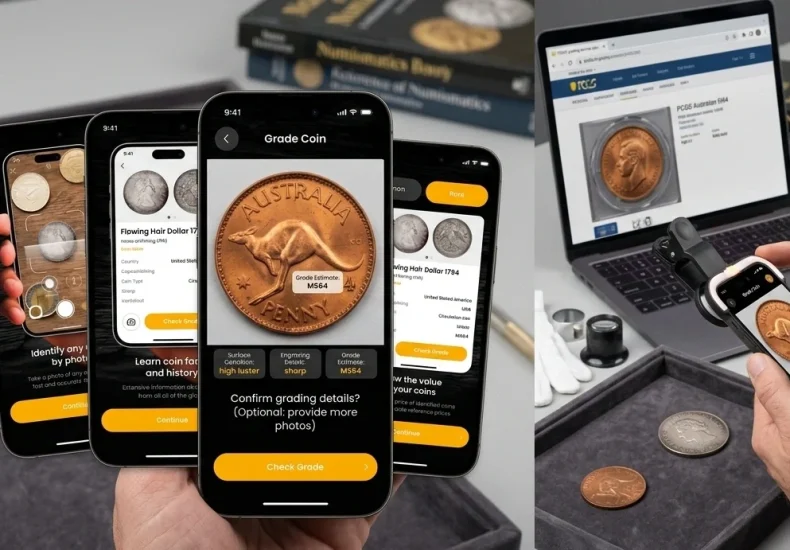
Coin Grading Letters: Where U Fits In
Coin preservation systems utilize shorthand for rapid identification of physical metal conditions.
Many beginning market participants incorrectly interpret this letter.
Like, what does a U mean in grades?
First scenario involves the Uncirculated condition.
Second variant relates to Ultra High Relief striking details.
Third case indicates an Unattributed category during the identification of die varieties.
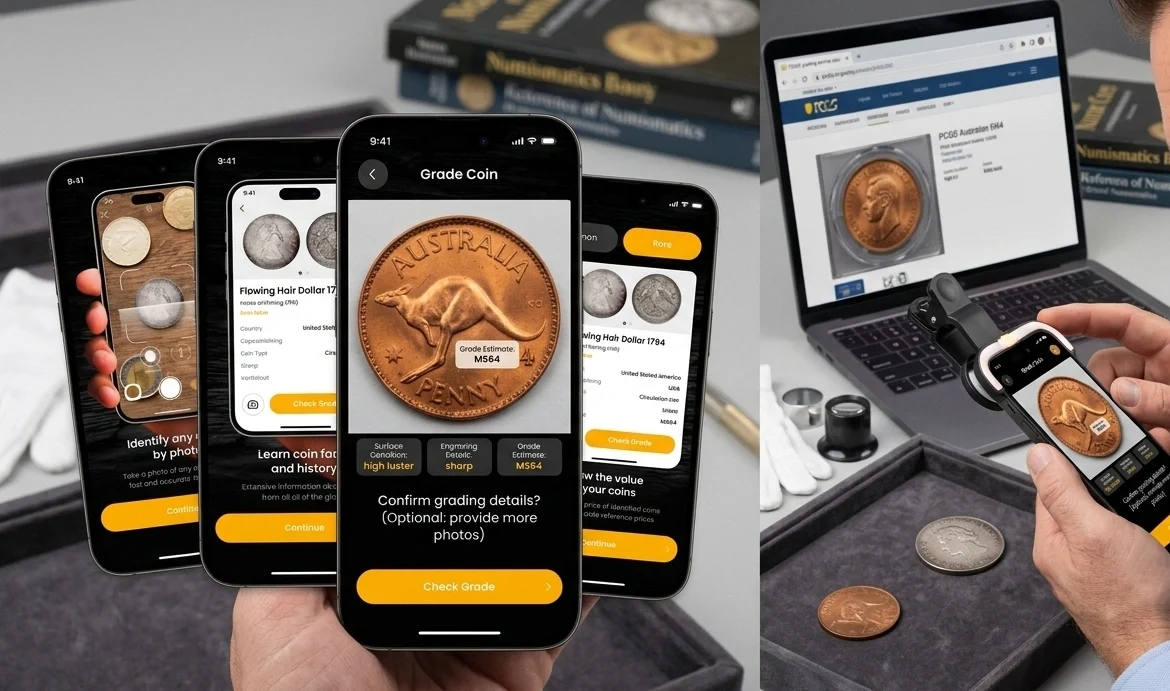
Accurate identification of this code directly influences asset capitalization.
| Abbreviation | Full Expansion | Sheldon Range |
| P | Poor | 1 |
| FR | Fair | 2 |
| AG | About Good | 3 |
| G | Good | 4, 6 |
| VG | Very Good | 8, 10 |
| F | Fine | 12, 15 |
| VF | Very Fine | 20, 25, 30, 35 |
| XF | Extra Fine | 40, 45 |
| AU | About Uncirculated | 50, 53, 55, 58 |
| MS | Mint State | 60 – 70 |
Letter U frequently replaces MS in European catalogs.
American standards prefer using MS for coins possessing original mint luster.
Substitution of U for MS → Reduced liquidity at US auctions → Requirement for recertification.
Technical Description of Uncirculated Condition
Coins qualify as uncirculated upon showing no wear on the highest relief points.
Minting processes form microscopic lines on the surface.
These lines create a luminescence effect known as mint luster.
Any contact with hard objects or human skin destroys this layer.
Appearance of dark oxidation spots indicates a violation of storage protocols.
Grade MS60 signifies the presence of multiple small scratches and contact marks.
Grade MS70 confirms the absolute absence of defects via a coin identification app.
Record Benchmarks: Copper Sector
Copper coins demonstrate the highest volatility depending on color.
Abbreviations RD, RB, and BN determine the market value of the item.
RD — Red.
RB — Red-Brown.
BN — Brown.
Specimens in MS65 RD condition often cost 10 times more than identical items in MS65 BN condition.
Price Record Statistics: 1930 Australian Penny (Copper)
| Condition | Sale Price | Year Fixed | 12-Month Growth |
| AU58 BN | $22,500 | 2024 | 8% |
| MS62 BN | $38,000 | 2025 | 12% |
| MS64 RB | $52,000 | 2026 | 15% |
| Proof | $1,150,000 | 2011 | — |
Pricing increases annually due to the diminishing supply of original Copper coins in red color.
Oxidation of Copper remains an irreversible process.
Transitioning from RD to RB category reduces asset value by 40% immediately.
Analysis of Scarcity Dates: 1923 Penny
This specific mintage year features low production numbers and high wear levels among surviving samples.
Most 1923 coins sit at grades below Fine 12.
Locating a specimen in Uncirculated condition represents an exceptional market event.
Parameters: 1923 Australian Penny (Copper)
- Metal Content: Copper 97%, Tin 0.5%, Zinc 2.5%
- Mass: 9.45 grams
- Diameter: 30.8 mm
- Mintage: 463,000 pieces
- Mint Location: Sydney
Market values in 2026 show the following levels.
VF20 → $3,200.
XF45 → $7,500.
AU58 → $15,800.
MS62 → $45,000.
Supply deficits trigger price growth of 18% annually for grades above AU50.
The Unattributed Problem
Letter U in expert working notes often signifies a lack of attribution.
Rare die stamps exist without descriptions in standard catalogs.
Identifying an inverted letter or an extra dot in the coin legend changes its status.
Identification processes include laser measurements of distances between letters.
Deviations of 0.1 mm indicate the use of a different master die.
Discovery of a new variety → Official registration → Fivefold increase in value.
Impact of Technology on Condition Assessment
Visual inspection in 2026 integrates with spectral analysis.
Devices determine the mixture of substances in the Copper patina.
Presence of external additives indicates an attempt at artificial toning.
Artificial oxidation deprives a coin of its right to a numerical grade.
Such items receive a Details marking.
Reasons for Assigning Details Marking
- Cleaning — Mechanical or chemical surface treatment.
- Environmental Damage — Corrosion caused by moisture or aggressive surroundings.
- Scratches — Deep marks violating metal integrity.
- Alteration — Attempts to change the date or mint mark.
Investment appeal for coins with a Details tag stays 70% lower compared to clean grades.
Ultra High Relief Grading
Letter U appears in the UHR abbreviation for modern investment strikes.
Ultra High Relief technology requires multiple die strikes against the blank.
This ensures relief depth exceeding standard parameters by 3 times.
Grading these coins involves evaluating the strike consistency across all details.
Comparison of Striking Technologies
- Standard Strike: Single hit, 80 tons pressure.
- High Relief: Double hit, 120 tons pressure.
- Ultra High Relief: Triple hit, 180 tons pressure.
UHR coins more frequently achieve top grades like MS69 and MS70 due to strict production quality control.
Copper Market Dynamics 2022–2026
Interest in the Copper sector stems from its accessibility relative to gold assets.
Average price growth for top positions reached 65% over the last four years.
2022 year: 9% growth
2023 year: 14% growth
2024 year: 11% growth
2025 year: 21% growth
2026 year: 19% forecast
Investors view Copper as a hedge asset under inflationary conditions.
Particular attention focuses on the preservation of mint luster.
Specimens in Red condition remain the most liquid.
Identification Errors in Uncirculated Status
Novice market participants frequently mistake cleaning luster for original mint luster.
Cleaning leaves micro-scratches oriented in a single direction.
Mint luster possesses a radial structure spreading from center to edges.
Utilizing a magnifying glass with lighting reveals the difference.
Verification Algorithm for U-Status Authenticity
Step 1: Checking for luster presence at sharp angles to a light source.
Step 2: Searching for contact marks on the portrait cheek or coin fields.
Step 3: Inspecting the rim for drop marks with the best free coin identifier app.
Step 4: Comparing weight to the reference value within hundredths of a gram.
Weight deviations exceeding 0.05 grams suggest wear or forgery.

Role of Encapsulation in Grade Preservation
Plastic holders, called slabs, protect Copper from oxygen contact.
Neutral environments remain maintained inside the capsule.
Certification guarantees the stability of the coin’s condition for decades.
Certification costs range from $30 to $150 per unit.
Slabbing becomes mandatory for coins with market prices above $500.
Global Classification and Letter Codes
Different nations utilize internal systems requiring translation to the Sheldon scale.
| Region | Equivalent Designation of U | Characteristic |
| United Kingdom | Fleur de Coin (FDC) | Perfect condition without circulation marks |
| Germany | Stempelglanz (ST) | Stamp luster, no damage |
| France | Neuf (N) | New coin condition |
| Russia | АЦ (Uncirculated) | No circulation, luster present |
Standards differences create arbitrage opportunities.
Purchasing a coin with European grade N and successfully certifying it as MS64 in the USA yields profit.
Profitability of such trades reaches 30% after deducting auction house commissions.
Chronology of Standard Shifts
Requirements for Uncirculated status tighten every 10 years.
Coins with light bag marks could receive high grades in the 1980s.
Today such defects lower assessments to MS61 or MS62.
Advances in macrophotography made tiny flaws visible.
Modern collectors target grades MS65 and higher.
Quantity of coins in perfect condition remains finite.
Each year portions of mintages lose RD status due to improper storage.
This creates a natural scarcity and supports high prices.
Relationship Between Grade and Historical Significance
High grades on common coins do not guarantee high value.
Merging a rare date with U-condition creates maximum demand.
Example of the 1930 Penny confirms this rule.
Existence of only a few specimens above XF40 makes them inaccessible to most.
Competition for such lots occurs at private auctions.
Exceeding the estimate by 2 times serves as a norm for rare Copper.
Collection Storage Methodology
Preventing metal degradation requires specific conditions.
Temperature: 18–22 degrees Celsius.
Humidity: no more than 35%.
Utilization of moisture absorbers to suck up excess water.
Prohibition of PVC-based albums.
PVC releases gases causing green film on Copper.
Green film → Destruction of the metal structure → Total loss of value.
Recent Posts
- Coin Grading Letters: Where U Fits In
- Common vs. Rare: How to Quickly Distinguish a High-Value Kennedy Half Dollar from a Regular One

- Guide on Tracking Location History: for Parents, Travelers, and More

- Is Your 1981 Susan B. Anthony Dollar Worth More Than You Think?

- Spring Accessories to Make Your Looks More Stylish and Unique
